
Water Stains Near Chimneys
Discoloration around a fireplace, chimney chase, or nearby ceiling may indicate moisture intrusion.
Some of the most vulnerable areas of a roof occur where different surfaces meet.
Chimneys, walls, dormers, pipes, and other roof penetrations require properly integrated flashing to help direct water away from those transitions.
DFW Strong Roofing evaluates and repairs residential roof flashing problems throughout Dallas-Fort Worth.
 Roof Replacement
 Roof Installation
 Roof Repair
 Roof Inspection
 Insurance Roof Estimates
What Is Roof Flashing?
Roof flashing is a water-management material, commonly made from metal, installed around roof transitions, penetrations, and intersections. Its purpose is to direct rainwater away from areas where roofing materials meet other building surfaces.
Common flashing areas
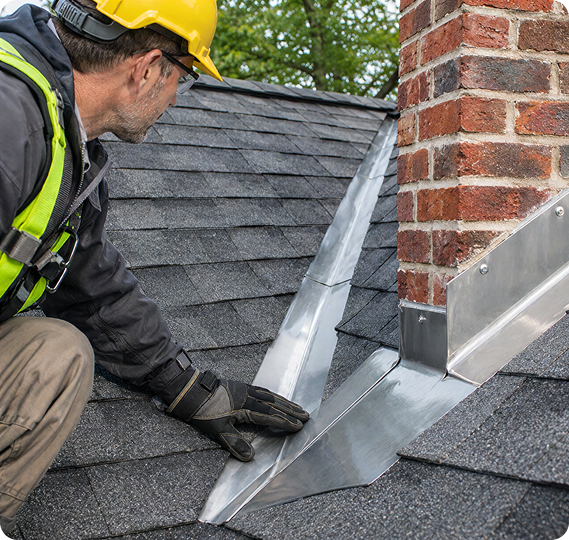
Chimney Flashing Repair
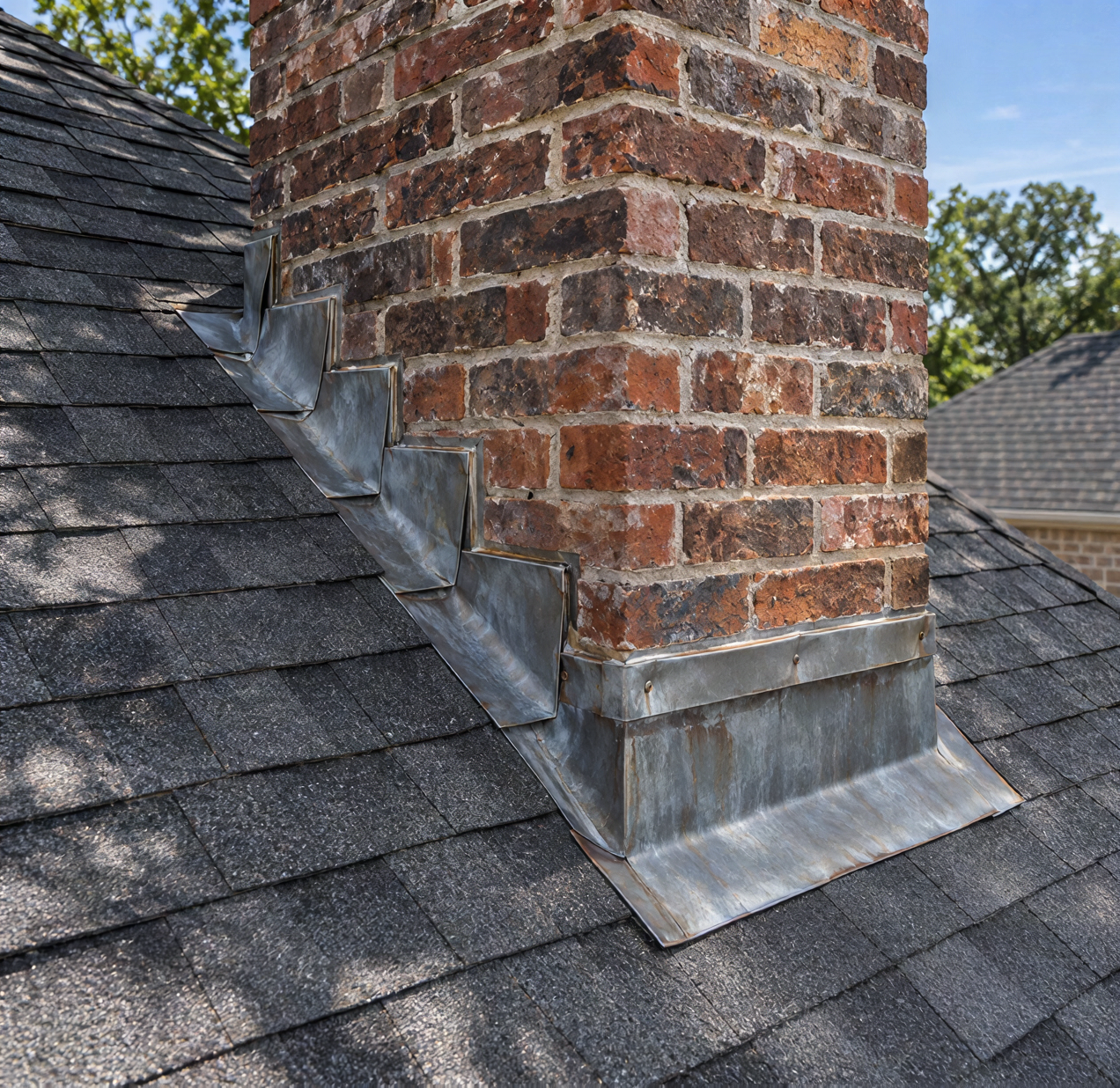
A chimney creates multiple intersections between the roof and a vertical structure.
Depending on the chimney design and roof configuration, several flashing components may be required to manage water around these transitions.
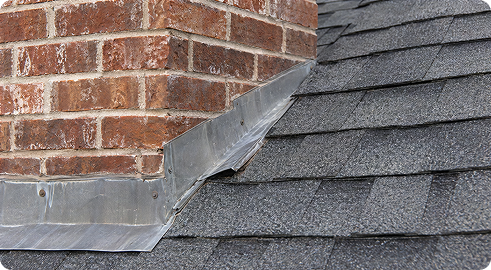
Chimney leaks can develop when these components become damaged, deteriorated, loose, or improperly integrated.
Individual flashing pieces installed along the sides of a chimney, integrated with successive courses of shingles.
Flashing used where the roof meets the lower or upper face of a chimney, depending on the roof geometry.
Flashing associated with the chimney’s masonry that overlaps underlying flashing to help direct water away from the joint.
Roof-to-Wall
Step flashing is commonly used where a sloped, shingle-covered roof meets a vertical wall. Individual metal flashing pieces are installed in sequence with the shingles to direct water away from the roof-to-wall connection and back onto the roof surface.
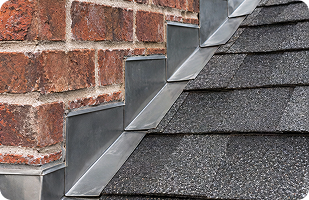
Rain moves down the slope and reaches the wall.
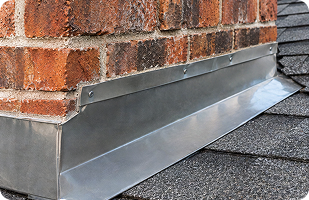
Each metal piece is installed with the shingle courses, not as one long strip.
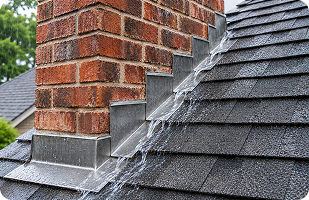
It is directed back onto the roof surface and away from the connection.
Penetrations
Residential roofs often contain plumbing vent pipes, exhaust vents, and other penetrations that pass through the roofing system.
These openings require compatible flashing assemblies to help prevent rainwater from entering around the penetration.
Failed penetration flashing can allow water to enter and travel along roof decking or framing. Repairs may involve replacing the damaged assembly and sealing it with surrounding roofing materials.
Warning Signs
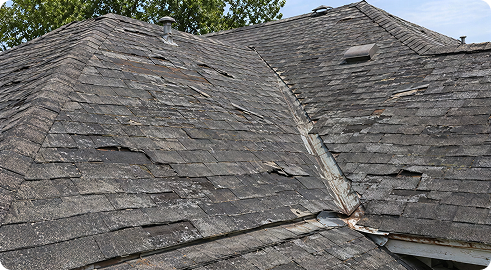
Flashing problems are not always visible from the ground. Some become apparent only after water enters the home.
Discoloration around a fireplace, chimney chase, or nearby ceiling may indicate moisture intrusion.
Leaks that return after previous repairs may indicate that the underlying flashing or adjoining materials still require attention.
Bent, loose, displaced, or corroded metal flashing may indicate a problem with the roof’s water-management details.
Water intrusion that occurs during strong storms may involve vulnerable roof transitions or penetration details.
Dampness or staining near dormers, exterior walls, or adjoining roof surfaces may be associated with flashing or wall-envelope problems.
Cracked or separated sealants around flashing may indicate aging materials or previous repair attempts that need evaluation.
How It Works
DFW Strong Roofing focuses on evaluating the condition of the flashing and surrounding roofing system before recommending the appropriate scope of work.
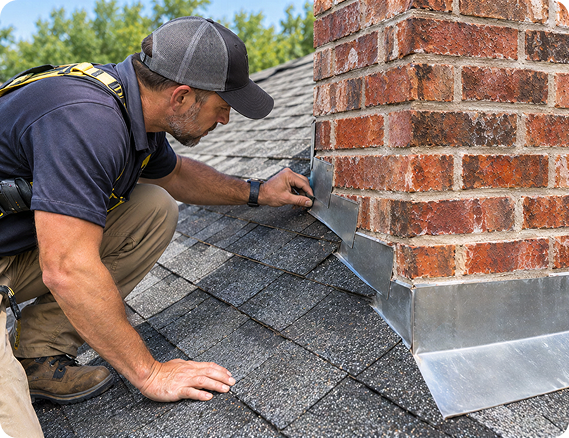
Tell us about your roof leak, damaged flashing, or moisture concerns. We’ll arrange a professional assessment to evaluate the affected areas of your roofing system.
We examine chimney flashing, roof-to-wall connections, pipe penetrations, and surrounding roofing materials to identify potential sources of water intrusion.
We explain our findings, recommend appropriate flashing repairs, and discuss whether damaged components can be repaired or require replacement.
Our roofing team repairs or replaces affected flashing components, integrating them with surrounding roofing materials to help prevent future water intrusion.
We review the completed repair, check accessible flashing connections, and clean the work area to ensure the project is properly finished.
Think Before Choosing
A flashing problem does not automatically mean the entire roof needs replacement. If the damage is localized and the surrounding roofing materials remain in serviceable condition, targeted flashing repairs may be appropriate.
FAQ
Checkout some of our recently asked questions
If you have noticed water intrusion near a chimney, wall, or roof penetration, a professional assessment can help identify the problem and determine the appropriate repair.